

EMS training explained
Used in physiotherapy and competitive sport for decades - and for some years now as training for anyone short on time.
How it works
Your brain controls your muscles with electrical impulses - EMS uses exactly this principle. Electrodes in the training vest send gentle impulses directly to your muscles while you do simple exercises. The result: many muscle groups work at the same time, including deeper layers that are hard to target with classic exercises.
That is what the training is designed for: one short, intense session a week instead of several evenings - with enough time in between for your muscles to recover.
Your body gets exactly the intensity it needs.
Muscle group by muscle group: your trainer sets each zone individually – stronger where you want to build strength, gentler where you need to be careful.
New every session: your trainer stands next to you, sees how you move and adjusts the setting to your day.
Intensity per muscle group Range For you
What happens in your body
The vest activates your muscle groups one after another - from top to bottom, until your whole body is working.
Neck & shoulders
The impulses start with your shoulders and neck - a typical problem area for anyone with a desk job.
Chest & back
Chest and back work at the same time instead of one after the other - in one exercise that would otherwise need two machines.
Abs & core
The deep core muscles are trained along with everything else.
Fully activated
By the end your whole body has had its turn - that is why the session is short and why there is a week in between.
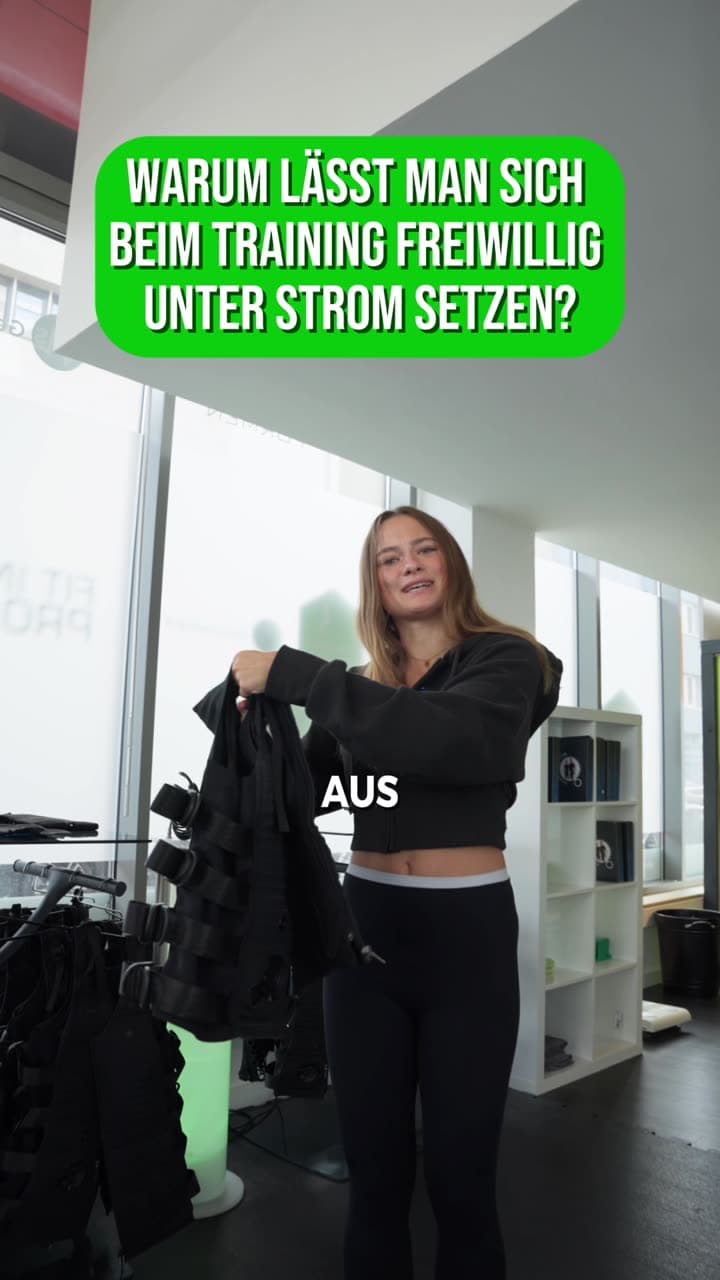
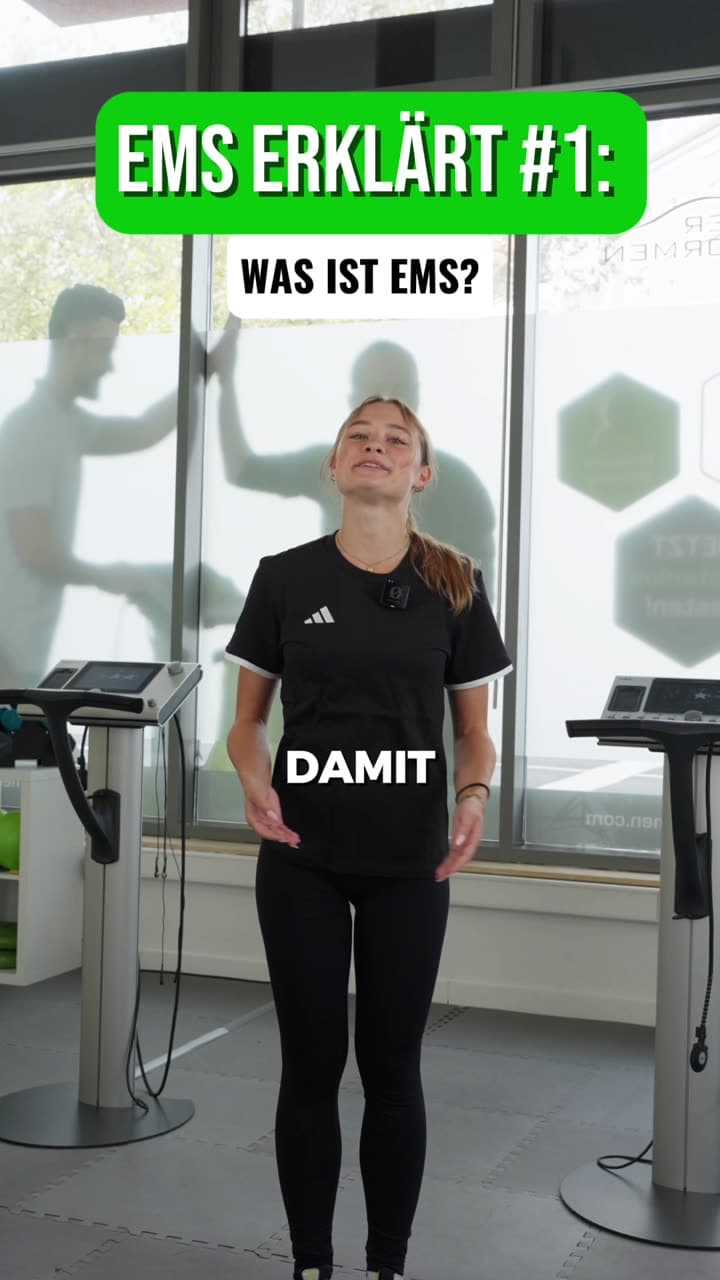
Vest on, impulses on
A trainer shows what the vest does and what training feels like – in German, with German subtitles.
What EMS with us is about
Short sessions, many muscle groups at once and a trainer who sets everything up for you.
Time per week
20 minutes of training
Muscle groups per session
many at once, including deep ones
Weights
none - the impulses are added to your movement
Supervision
always in person, by a trainer
Getting started
no experience needed - your plan is adapted to you
Intensity
set individually for each muscle group
Who is EMS suitable for?
In short: for almost anyone who wants to train efficiently - to get stronger, more toned or fitter.
Busy professionals
Little time, lots of desk: 20 minutes a week fits into any calendar - even your lunch break.
People who sit a lot
EMS also reaches the deep core muscles, which often get too little attention in classic exercises.
Getting back into it
Not done anything for a while? Training starts at your level and grows with you - no overload on day one.
Young parents
Build strength again after postnatal recovery without leaving the house for hours - one appointment a week is enough.
50 and over
Keeping your muscles matters more and more with age. EMS is easy on the joints and works without heavy weights.
Athletes
As a supplement to your sport, EMS adds an extra stimulus and lets you work on imbalances in a targeted way.
How your session works
From the door to the shower in under 40 minutes - this is what a visit looks like.
Check-in & health check
5 minOn your first visit we talk about your goals and your health - so the training suits you safely.
Functional underwear & vest
5 minWe give you functional underwear. Your trainer puts the EMS vest on you and connects it to the impulse device.
Setting the impulses
3 minEach muscle group is controlled and dosed individually - you have a say in what feels good.
The training
20 minSimple exercises like squats or lunges - the impulses are added to every movement.
Cool-down & feedback
5 minA relaxed finish with gentle impulses, then quick feedback and planning your next session.
When EMS is not suitable
What matters is supervision and your history. In these cases we do not offer EMS training at all:
- Pacemakers or other electronic implants
- Pregnancy
- Acute illness, fever or infections
- Epilepsy
- Serious neurological conditions
- Acute thrombosis
Not sure? Have a quick word with your doctor before the trial session - or ask us, we will give you honest advice.
See for yourself - for free
Theory is good, the tingle of the first impulses is better. Your trial session is free and without obligation.
Frequently asked questions
Once a week, for about 20 minutes. That is what the training is designed for: short but intense, with enough time in between for your muscles to recover.